
Held Hostage by Christmas: Revisiting Ted Demme’s The Ref
Released in 1994, The Ref stands as a Christmas film that refuses comfort. Directed by Ted Demme, it places the holiday not as a season of warmth, but as a pressure cooker where unresolved anger, class resentment, and family fatigue finally speak. Watching it today, especially in a crowded room, confirms how rare this kind of Christmas film still is: one that laughs not at innocence, but at endurance.
We first came to The Ref without the expectation of tradition. There are no miracles here, no sentimental redemption arcs wrapped in snow. Instead, Ted Demme builds his film around Gus, a small-time thief played by Denis Leary, who takes a suburban couple hostage after a botched robbery on Christmas Eve. What follows is less a crime story than a prolonged domestic autopsy.
The couple, Lloyd and Caroline Chasseur, are not victims in the conventional sense. Their marriage has long collapsed into passive cruelty. Gus, forced to stay inside their house while the police circle outside, becomes an unwilling referee to years of bitterness. The plot shifts to how quickly the hostage situation fades into the background. The real threat: the language this family has used against each other for decades.
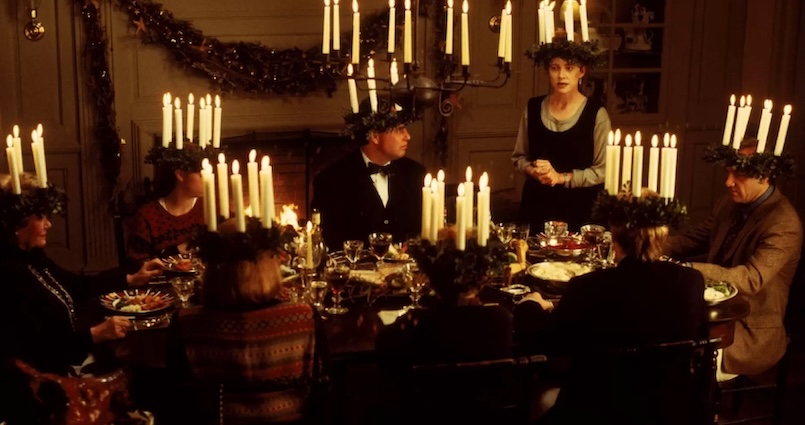
Christmas in The Ref is more functional than symbolic. The holiday forces people into rooms they would otherwise avoid. It demands performance. Smiles must be maintained, insults disguised as jokes. Demme understands that this obligation often exposes the worst instincts in a family, not the best. Gus, who enters as a criminal, slowly becomes the most honest person in the room. His anger is direct. His ethics, while crooked, are consistent.

This inversion places Gus firmly as an antihero. He has no interest in saving the family, but he refuses to let them lie to themselves. Denis Leary plays him without charm as camouflage. Gus does not soften; the house does. His presence strips away the polite lies that hold the Chasseurs together. In another film, this would lead to reconciliation. Here, it leads only to clarity.
The Ref belongs in a small lineage of dark Christmas films that use humor as exposure rather than escape. Films like Bad Santa or even Happiness (though not seasonal) share its interest in domestic cruelty masked as normalcy. Yet The Ref remains oddly overlooked, perhaps because it arrived before people were ready to accept Christmas as a setting for social discomfort. It is too sharp to be cozy, too funny to be dismissed as cynical. The exhaustion of maintaining appearances, the quiet rage of being unheard, the fantasy of an outsider saying what no one dares to say—these are not tied to the 1990s. They are present-day conditions.

Jakarta Cinema Club recently picked up The Ref as its Christmas film pick of the year. Watching it collectively confirmed something important: this film survives because it understands that family conflict does not pause for the holidays. It intensifies. This film is not underrated because it is obscure. It is underrated because it tells the truth too early, and too plainly. Christmas, Demme reminds us, is about proximity and what that proximity reveals.
Also read: Jakarta Cinema Club Secret Movie Saturday Christmas 2025