

Josep (2020): Drawing Memory from the Camps
Josep, directed by Aurel, approaches the Spanish Civil War from its aftermath rather than its battles. Through animation, the film reflects on exile, survival, and what remains of a life once everything familiar is taken away. Centered on Josep Bartolí, a Catalan artist imprisoned in French concentration camps, the film becomes a quiet meditation on memory, dignity, and the act of bearing witness.
The Spanish Civil War ended in 1939, but for many Republicans, the suffering only shifted location. As Franco’s forces took control, hundreds of thousands fled across the Pyrenees into France, expecting refuge. Instead, many were placed in makeshift concentration camps along the southern coast. Josep situates itself inside this often-overlooked chapter of European history, focusing not on political speeches or military strategy, but on the daily reality of hunger, illness, and waiting.
Josep Bartolí survives these conditions by drawing. His sketches become both record and resistance. In the film, drawing is not presented as escape, but as a way to stay human when systems are designed to erase identity. Lines on paper replace words when language fails. Food is scarce, privacy nonexistent, and the future unclear, yet the act of observing and recording offers a fragile sense of control.
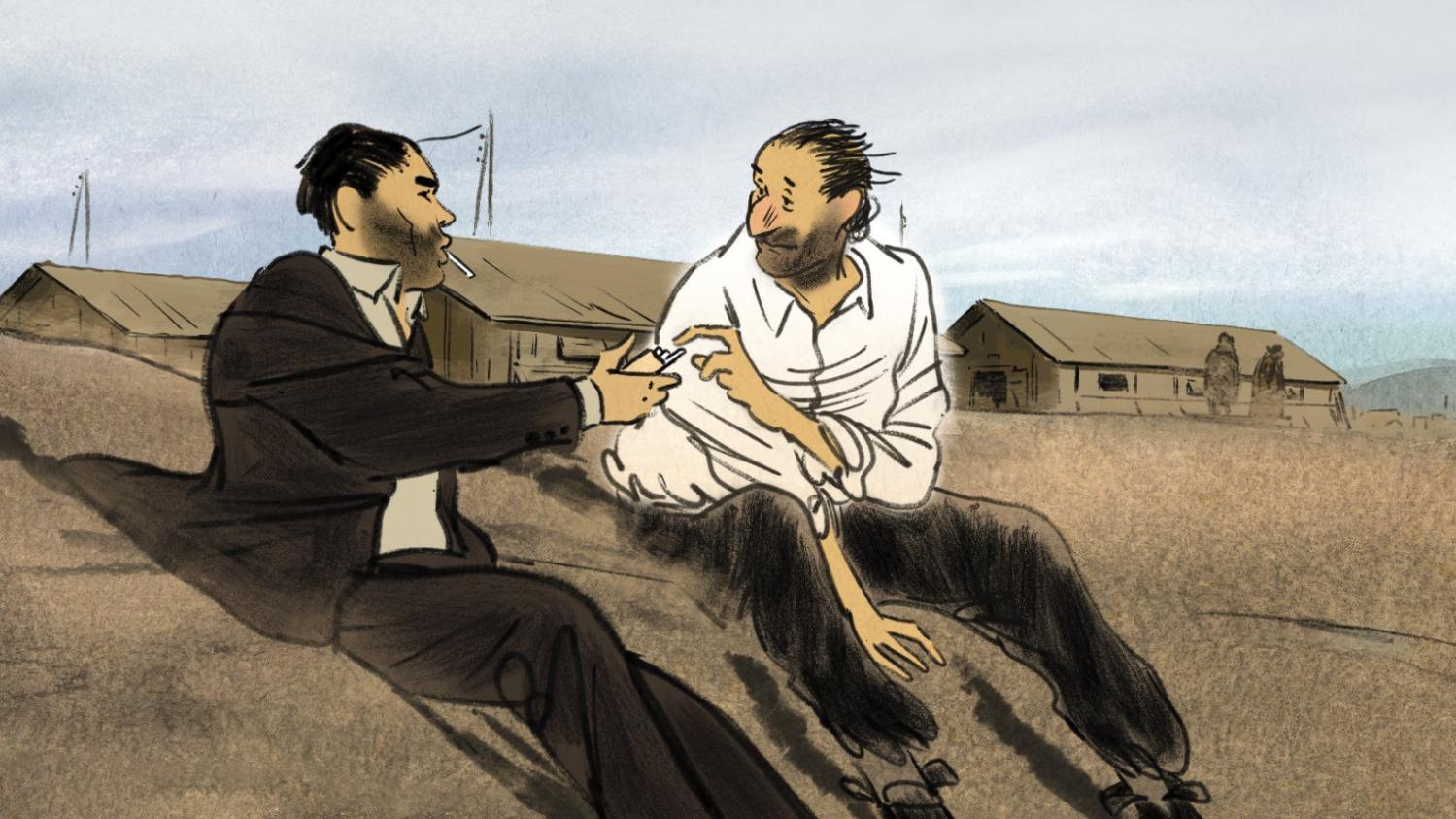
Aurel’s animation style is restrained and deliberate. The lines are rough, sometimes unfinished, echoing the conditions in which Bartolí himself worked. Color appears sparingly, often carrying emotional weight rather than realism. This visual approach places Josep close to animated works like Persepolis and Waltz with Bashir, films that use animation not to soften history, but to approach it from an inward, reflective angle. Unlike traditional historical dramas, these films accept memory as fragmented and subjective.
What sets Josep apart is its intimacy. The story is framed through the recollection of a French gendarme who befriends Bartolí, reminding us that even within oppressive systems, individual choices still matter. Compassion exists, though limited and costly. Life in the camp is shown as repetitive and exhausting, not dramatic in a conventional sense. This restraint makes the film’s emotional impact feel earned rather than forced.
Watching Josep today invites reflection beyond its historical setting. It raises questions about displacement, borders, and how societies respond to those fleeing violence. The film avoids grand conclusions, instead leaving viewers with images that linger, much like sketches preserved against time.
Josep uses animation to hold memory gently but firmly. By focusing on survival through art, it reminds us that history is often carried forward not by monuments, but by fragile lines drawn under impossible conditions.
Also read: Kareem Soenharjo on Chaos, Honesty, and the Films That Shaped Him