

Time, Fear, and the New Wave Gaze: Rethinking Agnès Varda’s Cléo from 5 to 7
Agnès Varda’s Cléo from 5 to 7 stands as a defining work of the French New Wave, capturing two fragile hours in a woman’s life while quietly reshaping how cinema could look, move, and feel. Rooted in real time and everyday spaces, the film speaks across decades to modern anxieties about image, visibility, and existence itself.
Released in 1962, Cléo from 5 to 7 arrived at the height of the French New Wave, a movement that pushed against studio polish and literary tradition in favor of immediacy, freedom, and lived experience. While often grouped alongside Godard and Truffaut, Varda’s approach feels distinct. Her camera listens as much as it looks. The streets of Paris are not backdrops but breathing environments, filled with chance encounters, passing sounds, and moments that resist neat conclusions.
The New Wave rejected rigid structures and embraced time as something elastic. Varda takes this further by anchoring the film almost entirely in real duration. We sit with Cléo as she waits for medical results that may confirm a life-altering diagnosis. This choice strips cinema of its usual escape routes. There is no dramatic shortcut, no relief through montage. The ticking clock becomes the film’s quiet engine, echoing the way anxiety slows the world when fear takes over.
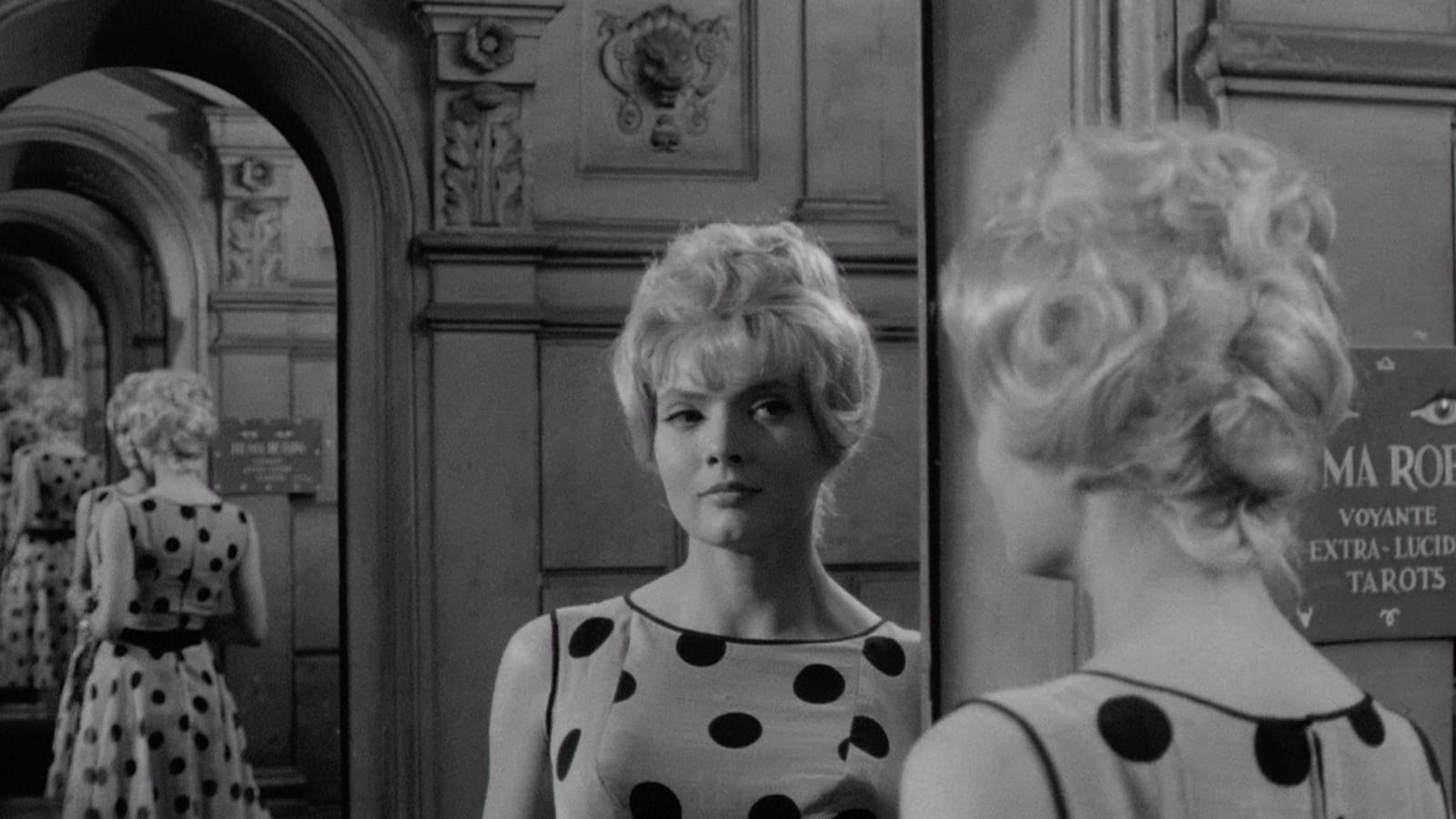
At the start, Cléo defines herself through surfaces. Mirrors, fashion, and the approval of others shape her sense of value. Varda frames this condition without mockery. In postwar Paris, beauty and charm are currencies, especially for women. This is where the film’s relevance sharpens for contemporary viewers. Today’s digital culture multiplies mirrors endlessly. Likes, views, and curated images promise reassurance, yet often deepen insecurity. Cléo’s fear feels familiar because it is tied to being seen but not fully known.
As she moves through the city, the New Wave spirit becomes clear. Non-actors drift through scenes, traffic noise bleeds into conversations, and humor appears in unexpected places. These choices ground Cléo in the present moment. The film gently shifts from self-absorption toward awareness. Paris stops being a stage and becomes a shared space filled with other lives, other worries.
The meeting with the young soldier near the end marks a quiet transformation. Both face uncertain futures, shaped by forces beyond their control. There is no grand lesson here. What changes is Cléo’s posture toward the world. Fear remains, but it no longer isolates her. Varda suggests that meaning does not arrive through answers, but through attention and connection.
Within the French New Wave, Cléo from 5 to 7 stands out for its empathy. It proves that formal experimentation can coexist with deep human concern. More than sixty years later, the film still speaks clearly. It reminds us that existential anxiety is not new, only newly framed. In watching Cléo learn how to inhabit time rather than flee from it, we are invited to do the same.
Also read: Jules et Jim and the Romance We Still Struggle to Name