
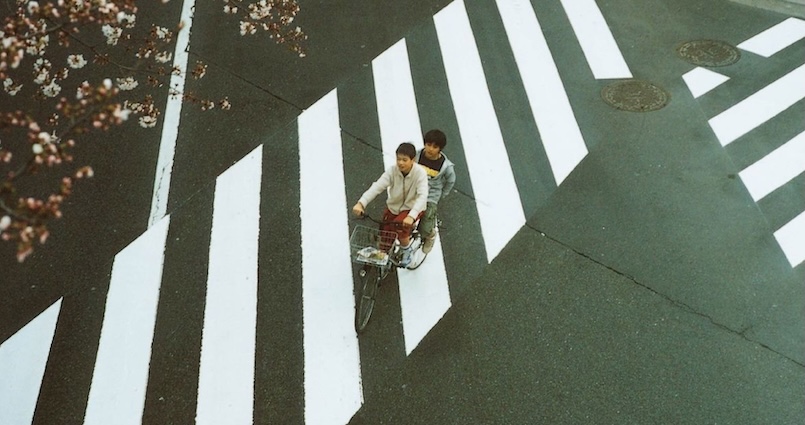
Growing Up in the Silence of Waiting: Reflections on Nobody Knows
Inspired by a real case of child abandonment in 1980s Tokyo, Nobody Knows is Hirokazu Koreeda’s restrained meditation on time, neglect, and quiet endurance. Rather than turning suffering into spectacle, the film observes the slow erosion of childhood as four siblings are left to navigate daily life on their own, revealing how absence, waiting, and societal indifference can shape a life as deeply as any visible act of violence.
Nobody Knows traces the quiet unraveling of childhood after abandonment. Loosely inspired by the Sugamo child abandonment case in 1980s Tokyo, Hirokazu Koreeda’s film observes four siblings left behind by their mother in a cramped second-floor apartment. Akira, only twelve, becomes the reluctant anchor of the household. From the outset, the premise suggests hardship, yet the film resists the pull of melodrama. Koreeda shifts attention away from survival as spectacle and toward the slow weight of time itself: the waiting, the small hopes, the steady realization that this arrangement may stretch far longer than anyone dares to admit.
Akira has already learned how to function as the family’s center. Even before their mother vanished for good, her presence was unreliable. She would disappear for days, sometimes weeks, leaving Akira to manage the basics. When money runs low, he knows which of his siblings’ fathers might lend a hand. Some do. Some don’t. He looks for work at a nearby minimarket, only to be reminded that he is still four years below the legal age. These moments define the film’s central tension. The children must live day to day without any path forward, caught between rules that exist and help that never arrives.
Their situation is framed not only as personal misfortune but as a broader failure.
The apartment remains theirs, untouched despite months of unpaid rent. The television and game console still sit in the room. What disappears are the essentials: gas, electricity, water. Neighbors and shopkeepers seem aware, yet no one intervenes. The children once reached out to authorities, only to be separated in the process. As Akira recalls, it was “a real mess.” From then on, the goal narrows to something painfully modest: hold on until Akira turns sixteen and can work legally.

Yuya Yagira’s performance as Akira gives the film its steady pulse. Koreeda neither frames him as a symbol nor pushes him into heroic poses. He is simply a boy carrying responsibilities that should never have been his. He studies alone at night, keeps routines intact, and briefly brushes against the possibility of friendship at a game arcade. That promise fades when he refuses to shoplift, marking him as an outsider even among peers. Meanwhile, his mother occasionally sends money with short notes, urging him to take care of the others. The gesture feels less like care and more like a test, one imposed without consent.
Midway through the film, Akira’s physical changes become impossible to ignore. His voice deepens, his body grows, while his younger siblings remain suspended in childhood. The imbalance sharpens their vulnerability. Koreeda maintains a measured pace throughout, stretching the film close to two and a half hours. The lack of urgency becomes its own form of tension, making the danger feel constant rather than sudden.
Visually, Nobody Knows blends careful reconstruction with moments of handheld observation, lending the film an almost documentary calm. It never insists on conclusions. Instead, it asks us to look, to sit with what we see, and to recognize how neglect can exist in plain sight. In doing so, Koreeda offers one of his most painful works, alongside Like Father, Like Son (2013). The ending carries its sorrow quietly, tempered by the children’s own resolve. It is a reminder that some of the strongest lessons in cinema arrive without instruction, leaving us to reckon with them on our own.
Author: Yusgunawan Marto, Jakarta Cinema Club
Yusgunawan is a Director/Cinematographer at NYRA, a podcaster at The Page and an editor at Jakarta Cinema Club
Also read: Loveless: Ballads of The Incompetent Parents


Pingback: Favorite Films of 2025: A Year of Feeling, Friction, and Returning to the Cinema - Jakarta Cinema Club