
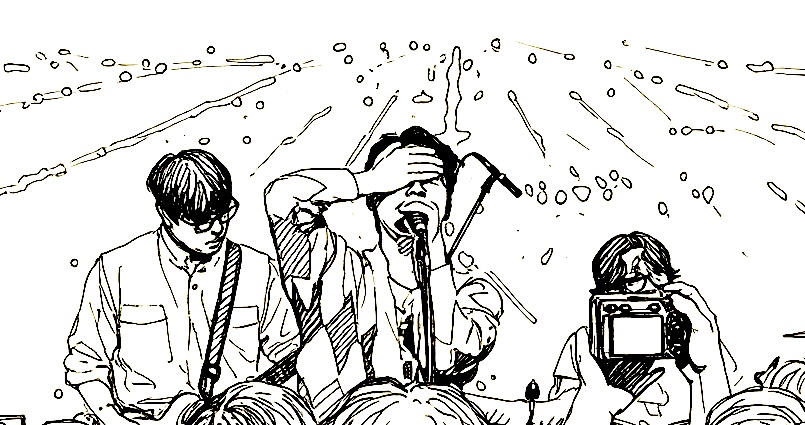
Off Script: Marcel Thee on Growing Up with Cinema
For this edition of Jakarta Cinema Club’s conversation series, we sat down with Marcel Thee—musician, creative entrepreneur, and a longtime observer of cinema whose relationship with film was shaped as much by family rituals as by late-night rewatches. From Sunday trips to Metropole with his father to formative encounters with Die Hard (1988), Days of Being Wild (1990), and Akira (1988), Marcel speaks about how movies linger, return, and quietly inform the way he writes, listens, and lives.
Marcel Thee belongs to a rare group of cultural figures whose work carries memory inside it. Known widely as the driving force behind Sajama Cut and several other musical projects—Strange Mountain, The Knife Club, Roman Catholic Skulls, The House of Faith and Mirrors, and Nakatomi Plaza—Marcel has also lived a parallel life as a writer and journalist, once reviewing films for major publications in Jakarta. Cinema, for him, has always been there, quietly shaping rhythm, restraint, and emotional timing. Beyond music, Marcel also runs The Good Word, a branding consultancy company. Busy man.
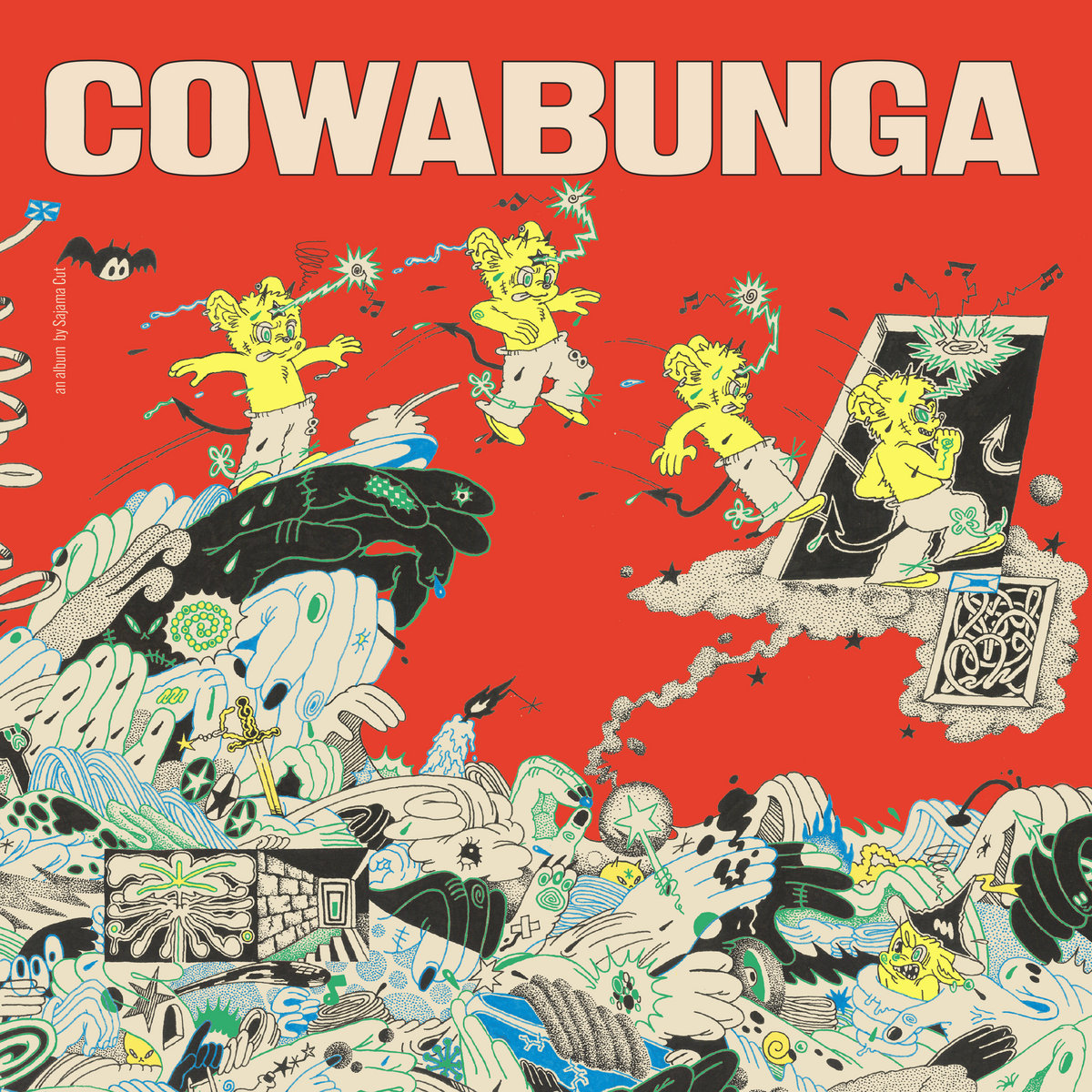
Sajama Cut released a new album in 2025, Cowabunga, which we consider one of the best albums of the 2020s—and no, that does not feel excessive. The album also feels like a long-awaited follow-up celebration after the infamous Godsigma (2020), which arrived just as the pandemic happened. With the formation of Marcel Thee (vocal), Arta Kurnia (bass), Aldrian Risjad (guitar), Dewandara Danishwara (guitar, keys), Daniel Hasudungan (synth, piano), and Adam Rinando (drums), Sajama Cut sounds fresh and fun, while continuing to explore alternative sounds as if they are living inside their own subgenre. Go to their show and you will feel the same way. And come on, just look at these lyrics:
“Kita kepingan lawakan bagi kenyataan yang berpangku tangan. Kau tuangkan ‘Paris, Texas’, Bysshe Shelley… ‘Maborosi’. Kau basuh ku dalam laut di mulutmu.”
It appears in a song titled “DI MASA DEPAN KITA TAK LAGI BERMIMPI” from Cowabunga, and the line quietly recalls Bi Gan’s Resurrection (2025), where the act of dreaming carries a bitter irony: the more one dreams, the less one seems to live. The thought feels familiar in Marcel Thee’s writing, where longing is never pure and hope often arrives with its own cost. One wonders what occupies Marcel’s mind when shaping lyrics and music. We think that many of Marcel’s works feel like scenes that move patiently, linger in absence, and trust the audience to sit with them. It is precisely this quality that drew Jakarta Cinema Club, through Christian Putra, to sit down with him for a conversation about films. It’s not in the sense of lists or rankings (do we care about rankings? well.. sometimes), but films as lived experience.
This Off Script session took place in South Jakarta, stretched out as a recollection of childhood rituals, teenage awakenings, romantic attachments, and the slow shift from being a son watching films beside his father to becoming a father himself, choosing what to show his children. What follows is the conversation as it happened.
Christian Putra (CP): Hi Marcel. How’s life?
Marcel Thee (MT): Good, Put. Good. Life’s good.
CP: Congrats, by the way, on the release of Cowabunga by Sajama Cut. The new formation looks fresher than ever. I love the album., and honestly all of that can’t be separated from your “divine hands,” haha.
MT: Wow… “divine hands.” That’s very kind.
CP: Do you still manage to watch films this year, in the middle of your busy days?
MT: I do. Every night I still try to make time to watch something. Usually I watch my “safe” films. Films I’ve already watched many times. However, I’m also still actively looking for great new films through any source I can get. I mean, “any source” hahaha
CP: Hahaha so you mostly watch films at home then?
MT: Yes, that’s right. But sometimes we watch films at the cinema, all four of us (me, my wife, and our two kids), and then a few days later, suddenly, the film shows up on a streaming platform.
CP: Oh, you mean back then we had to wait a really long time for a film that played in theaters to become accessible at home?
MT: Exactly. There was this sense of exclusivity. The last really memorable cinema experience for me was the Interstellar (2014) reissue in IMAX. Suddenly that made me remember my very first time watching something in IMAX a long time ago. Was it The Avengers (2012)? I was still working at The Jakarta Globe back then.
Back then, I used to go to the cinema a lot on Mondays. At that time, my job was writing film reviews for several media outlets.
CP: That’s cool. Okay, let’s go back to your music for a moment. The artwork and some of Sajama Cut’s song titles or lyrics feel very cinematic.
MT: Well… basically there are certain films that align with the themes of some songs, and that makes everything feel more connected, but it’s never planned. Usually when I’m writing lyrics, I get triggered by memories of certain films.
CP: Memories of watching them, or memories of the films themselves?
MT: More about the context of the film. What the film is about. For example, if I’m writing a song and it ends up being about parents, then I remember a film that talks about something similar, that aligns with it. But that only happens sometimes. Not every song has a film behind it.
CP: But every album has some element of film in it.
MT: Oh yeah, that’s true. I don’t know why. Almost all of them do. Yeah, almost all.
“Discerning is necessary. What’s the point of standards and curiosity if you’re not upgrading yourself?”
CP: Do you see yourself as a snob?
MT: Haha. You kind of have to be. I think discerning is necessary. What’s the point of having standards? What’s the point of having education, curiosity, and access to so much information if you’re not upgrading yourself? It’s like wearing a music T-shirt. Anyone can wear one. For me, at least care a little. Care a bit about what you represent in what you say and what you put on your body.
CP: Love it.
MT: Haha.
CP: Okay, let’s flash back a bit. Do you remember one film from your childhood that reminds you of your family or more specifically, your parents? Maybe the first film your parents took you to see in the cinema?
MT: My dad was obsessed with films. We went to the cinema once a week, without fail. Sundays were movie days. That was his way of self-reward, because he worked like crazy every day until 3 a.m. So on Sundays, our whole family had been going to the movies since we were little. Sometimes in Kelapa Gading, sometimes at Megaria (now Metropole). Mostly Metropole. In the late 80s and early 90s, I think. If not Sunday, then Tuesday. He’d come home from work and say, “Marcel, let’s go watch a movie.”
I don’t really remember one specific moment, because he took me so often from such a young age. And the funny thing is, my mom always fell asleep in the cinema hahaha. But she always joined anyway. It was already a family ritual.
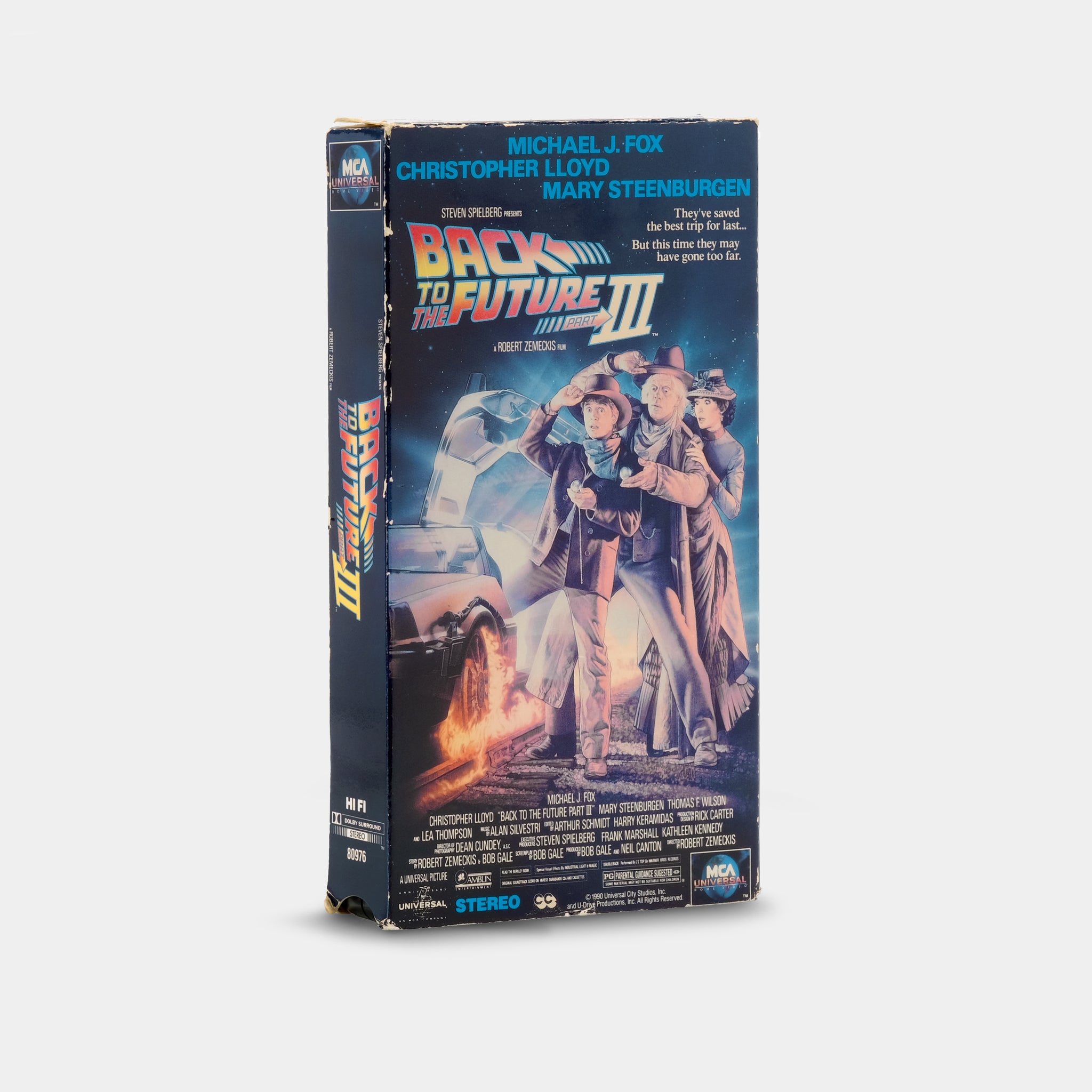
If there’s a film I associate with him, maybe Back to the Future Part III (1990). The one with the Western setting. Actually, it’s probably the weakest of the trilogy. I remember watching it with him, and with my mom too. We were still living in Canberra at the time. It’s a Robert Zemeckis film, right? His films are very much family adventures. Back then, going to the cinema felt like going on a trip. Watching a film had to be planned, and the film really delivered. Big films that felt big. That’s what I remember.
And then there’s another one — not in the cinema, but on TV. Because it was released in 1988. The first Die Hard. That’s also in my top ten. That film is a masterpiece. A masterpiece of filmmaking, not just an action film.
CP: Did you watch it during Christmas?
MT: I don’t remember whether it was Christmas or not, but I remember watching it with him when I was nine. That was probably the age where my memories are still very clear. I remember watching it on TV, and it felt very memorable. My dad, when he watched films — honestly, I’m not sure he really understood everything that was happening — but he was always expressive. He was very expressive whether he was watching an action film, Warkop DKI, or Kadir-Doyok. So yeah. And maybe the first Home Alone (1990), too. I’m old, man.
CP: When you rewatch those films now, do they make you feel melancholic?
MT: Yes! Especially with my dad. A lot of things make me feel melancholic. Whenever I think about ’80s action films with macho actors — Arnold Schwarzenegger, Jean-Claude Van Damme, Sylvester Stallone — I always think of my dad. He really loved those films.
CP: Bloodsport?
MT: Bloodsport (1988)! But I don’t think I watched that one with him. I think I watched Kickboxer (1989) with him. Tong Po! Tong Po. Back then there were so many ultimate fighting films. Even though the actor playing Tong Po in Kickboxer was actually a white guy, not Asian. But back then there weren’t many Asian actors in Hollywood. Today, that would probably be protested. Whitewashing, they call it.

CP: Do you ever get tired hearing all these new terms?
MT: I do, but I understand them. I’m fairly “woke.” I think representation in film is very important. When I was a kid, that concept didn’t exist. But we also have to remember that sometimes these rules feel like rules for the sake of rules, not genuine social consciousness. At the same time, there are definitely people who are narrow-minded, like racists. I think sometimes we need to fight back. I’d rather have a “woke” person than a bigot.
CP: No country for bigots.
MT: Yes!
On Coming of Age
CP: Earlier you talked about your childhood. Now let’s move into your coming-of-age period. Can you tell us one film that was really important during your formative years — a film that made you want to dig deeper into cinema and its creators? Or maybe adult films you secretly watched without your parents knowing? LOL
MT: Coming-of-age usually means teenage years, right? There’s one film that had a huge impact on me — where I realized this was a film made by people who planned everything: the special effects, the story, the execution, the legacy… or whatever you call it. Anyway, it’s Terminator 2: Judgment Day (1991). I remember it very clearly. Just like Die Hard, I’ve probably watched it about fifty times. Every time it’s on, I can still get excited watching it at night. I never turn it off.
CP: That film used to be used by audio stores to test speakers.
MT: Yes, exactly. The audio is insane. And after Terminator 2, I started becoming more aware. I started reading about films in magazines and newspapers. For example, there was one called Fangoria, though that was more focused on horror, as well as small film columns in local papers. This was all before the Cinemags era.
CP: So you started paying attention to film review columns in newspapers and magazines?
MT: Yes! I was still quite young, so maybe not very conscious yet. But by the mid-’90s, when I was a teenager, I became very conscious. And then there was Days of Being Wild (1990) by Wong Kar-wai. I don’t remember where I watched it — maybe on Betamax from a rental place.
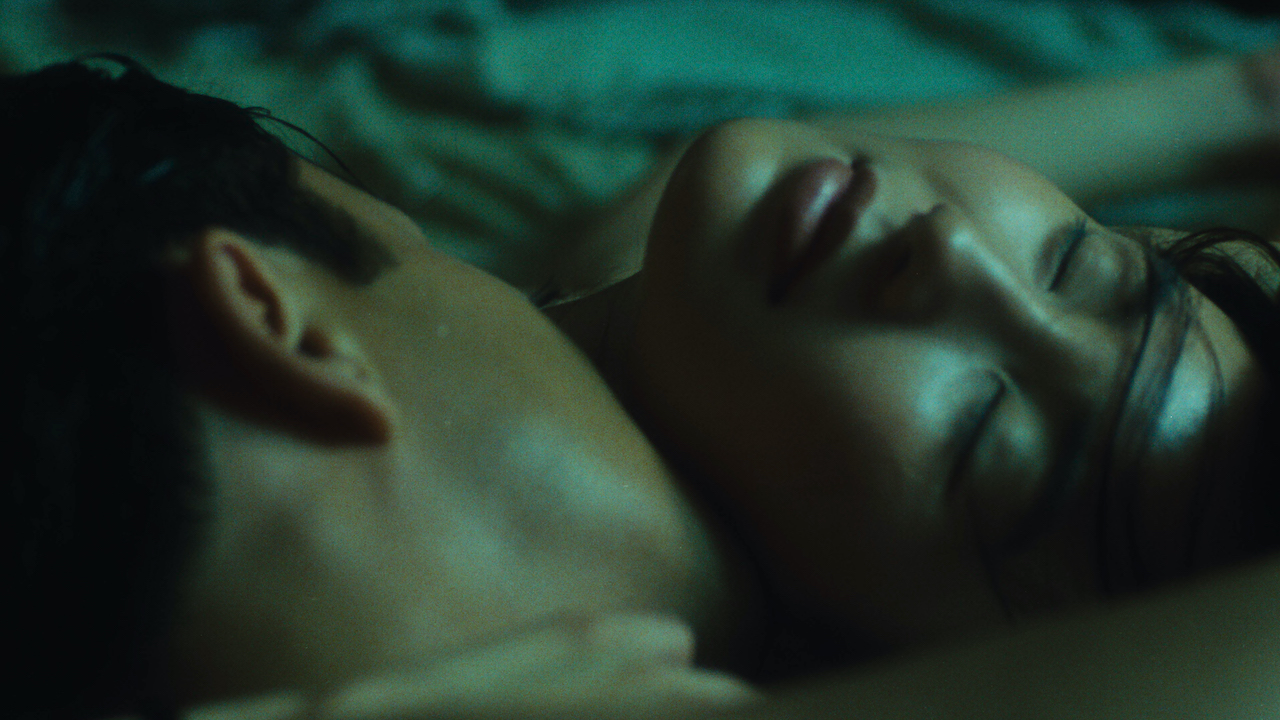
I was a teenager. That film really messed me up. It offered something so slow. Even though it was slow and didn’t really have a peak, nothing really happened. At that age, we didn’t yet have enough life experience to fully understand the melancholy it offered.
There’s a scene in Days of Being Wild — it has several sections, several characters — but that scene with Andy Lau, where he ends up as some kind of security guard and has that separation moment. That’s probably my number one scene in all of cinema. I’ve never felt that feeling again, even in Wong Kar-wai’s other films like In the Mood for Love (2000). They can’t reach what Days of Being Wild had.
CP: His style was starting to change too, right?
MT: Yes.
“I watched Akira at nine, thinking it was just a cartoon. Now I see it as forecasting.”
CP: Maybe Days of Being Wild can still be paired with another film released not too far apart?
MT: As Tears Go By (1988)?
CP: Yes! That one.
MT: That one was still experimental. He was still young.
CP: That was also an era when a lot of Hong Kong films were distributed in Indonesia, right?
MT: Yes, but mostly around Gajah Mada and places like that, I think. Honestly, I was never really comfortable watching films there back then. Whenever I went to Gajah Mada, I didn’t like the atmosphere. There were a lot of pacinkos hanging around. Shady people. It felt kind of scary. Watching movies at Gajah Mada felt very ghetto, Gajah Mada Plaza. It still exists, right? Hong Kong films were usually screened only there, around Kota, Krekot, those kinds of areas. I rarely went there
I watched films with my dad at Metropole. My dad didn’t really like Hong Kong films, so I watched them with an older neighbor. He was maybe in sixth grade while I was in fourth. He was grounded, but also kind of bad. We’d go to the cinema, take public transport, jump off, run. It was scary. He taught me how to gamble and stuff. Not a good kid — but he introduced me to God of Gamblers (1989), All for the Winner (1990), and other decent Hong Kong films.

CP: That was Andy Lau’s era, right? I also remember A Moment of Romance (1990). But thinking about it, Days of Being Wild feels very different from his usual films.
MT: Yeah, in the ’90s he became very famous and went commercial. Not always, but mostly.
CP: Andy Lau never really made it to Hollywood.
MT: He didn’t go to Hollywood probably because his English wasn’t great. Breaking through is very hard. Even Chow Yun-fat didn’t really succeed.
Okay, enough about Hong Kong films. Oh…. Akira (1988)! That’s the big one.
CP: By the way, Akira was screened here last year.
MT: Oh yeah? Where?
CP: Starium.
MT: Fuck. That’s crazy. I remember watching it with my mom when I was nine. The theater was empty. I thought it would be like Voltus V (1983) — heroes and villains. Then there’s that scene where a woman’s clothes get ripped. I freaked out. I was watching with my mom. It was so embarrassing. What the hell is going on? But now when I watch it, in this modern era with current world situation, it feels like a forecast.
And another anime — this one’s more obscure — Night on the Galactic Railroad (1985). It’s weird. Not as cool as Akira, but it’s about riding a train through the galaxy, moving from one place to another. Very melancholic. I remember watching it at a Japanese film festival.

CP: Nice. The latest Japanese Film Festival edition had Ghost in the Shell (1995) and Seven Samurai (1954).
MT: Oh, Seven Samurai? That was also a coming-of-age film for me. I watched it on TV. My dad told me, “You have to watch this.” It aired around 1989.
CP: Your dad was cool.
MT: Yeah. I remember thinking, “Why is this film three hours long?” Three hours, man. Watching a three-hour film at age nine felt like torture but it was amazing.
CP: Even though that era already got people used to long films through Indian cinema.
MT: True. Indian films were huge back then. Now you rarely see them in cinemas.
CP: There are still one or two.
MT: The last Indian film I watched was RRR (2022) It was great.
CP: Back to your father.
MT: Haha. Yeah, he recommended a lot of films. He loved cinema, but he wasn’t really a cinephile. He probably didn’t know the difference between Seven Samurai and Kadir-Doyok films. To him, both were entertaining.
CP: Maybe he was already very exposed to world cinema and wanted you to be open-minded too.
MT: Yeah, he traveled a lot from a young age. People who are used to seeing the world tend to see world cinema as something natural.
CP: Couldn’t agree more
On Romance
“Tuhan, rendamkan aku di dalam hangat air matamu. Rangkaikan berang Debussy
Ingrid, cairkan aku di altar abadikan kandungmu. Remukkan hitam di hati”
CP: Let’s go back to Days of Being Wild. Let’s talk about romance, man. Was there a film that made you romantically attached — something you imagined during your dating years?
MT: That’s a hard question. I’ve been trying to think. Maybe In the Mood for Love (2000). That’s number one. The thing is, I’ve known my wife since second year of junior high school. We watched films together even when we were just friends.
Another one that stuck with me was You’ve Got Mail (1998). Meg Ryan and Tom Hanks. Sleepless in Seattle too.
CP: That was the golden era of romantic comedies.
MT: Yeah. And then — this one’s cheesy — Serendipity (2001). John Cusack and Kate Beckinsale. That was wild. And then Notting Hill (1999). I rewatched it recently. Hugh Grant. His latest film was called Heretic (2024), right? It was okay. The ending was a bit cliché — like those atheists in Reddit forum hahaha.
CP: Haha. So your romantic film is In the Mood for Love. Why?
MT: I don’t know, man. In the Mood for Love, Die Hard, and Terminator 2 are the films I’ve watched the most.
CP: Sometimes the films we consider romantic are ones we didn’t even watch with our partners when we’re dating, right?
MT: That’s true. Back when I was dating, I just watched whatever was playing in the cinema. It was more about going out together. I’ve known my wife since we were 14, but we only started dating when I was 24. I remember our first date movie was Harry Potter or something — which I didn’t like. I fell asleep. Prisoner of Azkaban (2004), maybe? Gary Oldman was in it, which is one of the better ones, but it didn’t click for me. I don’t know why fantasy films are so hard for me to like. Even Lord of the Rings — I really tried, but I only liked the second film. I read the books too. One of the first books I ever read. But the films just didn’t work for me.
On Being A Father
CP: We’ve talked a lot about how influential your parents were, especially your father. Now you’re in the phase he was in — building a family.
MT: Yes, yes.
CP: Is there a film that’s most memorable watching together as a family?
MT: Because my kids have a big age gap, our shared taste isn’t fully aligned yet. But the most memorable one for me was the latest Teenage Mutant Ninja Turtles: Mutant Mayhem (2023). It was great. The animation was beautiful — semi hand-drawn. The soundtrack was by Trent Reznor and Atticus Ross. Seth Rogen was one of the producers. It’s exactly my generation — he grew up with that stuff. It really hit.
But what I’ve really succeeded in educating them with are Ghibli films. They’re beautiful, cinematic, and not like Hollywood films that are all noise and explosions. Even my younger kid, who’s only seven, doesn’t complain about slow pacing. He’s fine.
The last long film he watched in the cinema was Avatar: The Way of Water (2022). Almost four hours, right? He loved it.
For Ghibli films: My Neighbor Totoro (1988) is one. For my daughter, Ponyo (2008). So those are probably our family films now — plus old Donald Duck cartoons on YouTube.
My son is pretty wild, but he can watch anything. Yesterday in the car we watched Toy Story 3 and 4. Toy Story 3 (2010) is one of the best films ever, I think. But he can also watch nonsense animation — some brain-rot stuff, Roblox shit, haha.
CP: How about Jumbo (2024)?
MT: What? Oh — we missed that one, man. I feel really guilty. Sorry, Indonesia. It was just a scheduling thing. We almost watched it at Eastvara BSD, but my older kid was busy preparing for high school, so it didn’t happen.
CP: Speaking of Jumbo, what about local films? Is there one Indonesian film you really admire?
MT: Easy. The first The Raid (2011). I watched it at a media screening when I was a journalist at The Jakarta Globe. We watched it with the director, Gareth Evans. The audience was screaming the whole time. I’d never experienced anything like that. It made me really proud. He’s not Indonesian, but for me that film was almost on the level of the first Die Hard.
CP: Do you still watch Indonesian films often?
MT: I used to, when I was reviewing films for english-language newspapers. Horror films. Forced to. They were terrible. The 2000s leading up to 2007–2010 were insane. Still are, maybe. They were bad. I trashed all of them. Every single one I reviewed.
CP: Hahahahaha not so much anymore?
MT: Rarely. Not because I don’t want to. The last ones I watched were actually watched by my wife and daughter. They watched Imperfect (2019) — they loved it. And a horror-comedy about a haunted house. I watched it on streaming. Ingrid and my daughter watched it in the cinema. They were raving about it.
CP: Agak Laen (2024).
MT: Yes!
“Not all of M. Night Shyamalan’s films work, but I deeply respect his fight for original ideas.”

CP: One last question. Your favorite director?
MT: Oh, damn. Film snobs might think this is lame, but I’d go to bat for him. M. Night Shyamalan. Maybe he’s not my number one, but I want to shout him out. He’s brave. He funds his own films. He even put his house on mortgage. And in this era, he still makes original stories.
CP: His latest film was Trap (2024).
MT: Yeah, Trap. I watched that with my kid. It fits. A dad trying to be cool, watching a concert with his kid. Not all his films work, but I really appreciate that original ideas still exist. So M. Night is up there for me — with Akira Kurosawa, Spielberg, Wong Kar-wai, Tsui Hark, and Ozu. I really love Ozu.
CP: Ozu is great. I remember he already criticized parental figures way back in I Was Born, But… (1932)
MT: And that was a long time ago. Crazy. By the way, I once had a turtle named Ozu, haha.
CP: Oh really? Haha. I wish we’d had more time to talk about Ozu, but it was such a pleasure talking about films and life with you. 🙏
MT: Thanks a lot, Put 🙏
Marcel Thee talks about films the way you talk about rooms you once lived in. Movies sit beside him across time: watched with his father on quiet Sundays, replayed endlessly on television, rediscovered late at night when the house has gone still. They are like companions that age alongside him. What mattered at nine shifts at fourteen, then returns again when he watches with his own children. In Marcel’s world, cinema is perhaps about allowing images, sounds, and small moments to come back when you least expect them, carrying new weight. Oh and our current favorite Sajama Cut songs are Plaza Selamanya, Leslie Cheung” Melukisku Melukisnya, Bloodsport, HOMILI/MENATAP WAJAH TUHAN, and DEVOSI, GODSKIN & KEBAHAGIAAN SEUTUHNYA.
Please check out a film list curated by Marcel Thee from this conversation on our Letterboxd.
This conversation would not have happened without the help of Gilang Qidra Ramadhan.
Also read: Kareem Soenharjo on Chaos, Honesty, and the Films That Shaped Him


Pingback: Béla Tarr and the Weight of Time - Jakarta Cinema Club