

Our Current All-Time Favorite Cannes Winners
In anticipation of the buzz surrounding the upcoming Cannes Film , Jakarta Cinema Club gathered several Cannes winners—particularly Palme d’Or recipients—that have left a lasting impression on us.
The Palme d’Or is the highest honor at the Cannes Film Festival, having gone through several name changes in the past (Grand Prix du Festival International du Film and Grand Prix). Through festivals such as Cannes, Berlin, or Venice, we are given a window into films from other countries that deserve to be seen. Below are several Palme d’Or–winning films that deserve a place on your watchlist:
1| Brief Encounter (David Lean, 1945)

Among all the films ever watched, there has rarely been one as perfect, in such a short running time, as Brief Encounter(1945). The romantic relationship it portrays may last only briefly, yet it lingers long enough to make you dream forever. Brief Encounter won the Grand Prix du Festival International du Film (the title used before Palme d’Or) in 1946.
(Yus)
2| Taste of Cherry (Abbas Kiarostami, 1997)

From Ordinary People to Peppermint Candy, films centered on suicide—whether we like it or not—occupy a distinct niche in cinema. Taste of Cherry (1997) stands as one of the finest explorations of existential questions. The film follows a single day in the life of a man searching for someone willing to help him end his life. Kiarostami uses this premise to examine the concept of suicide within Iran’s conservative society, without passing judgment. At times, we sing about how beautiful life is—perhaps because we know it will one day end. In Taste of Cherry, life is at its most beautiful. Taste of Cherry won the Palme d’Or in 1997.
(Faiz)
3| Blowup (Michelangelo Antonioni, 1966)
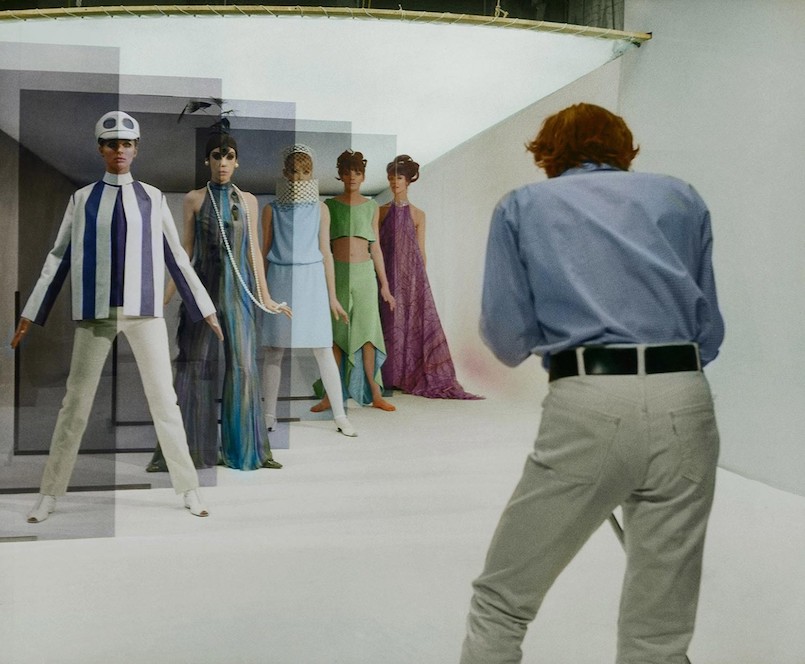
A story that exploits analog media—photography—as its central mechanism? What we observe here is not only the atmosphere of an amateur detective story, but also the unique architecture and interior of the photographer’s studio and home. These elements allow our imagination to wander, filled with curiosity and fear about the mystery that is waiting to be uncovered. Blow-Up won the Palme d’Or in 1959.
(Putra)
4| Apocalypse Now (Francis Ford Coppola, 1979)

Through the ambitious project Apocalypse Now (1979), Francis Ford Coppola succeeded in visualizing the darkness within the human soul with beauty and restraint. The behind-the-scenes production process—documented in Heart of Darkness—is just as compelling as the film itself, especially given the shoot’s duration, which far exceeded its original plan. Apocalypse Now won the Palme d’Or at Cannes in 1979.
(Yus)
5| Paris, Texas (Wim Wenders, 1982)

The way Wenders frames the landscape of modern civilization is remarkable, effectively conveying a sense of alienation and fear. This fear emerges when humans are confronted with the rapid development of infrastructure and technology that makes them feel increasingly small.
(Yus)
Best performance in Harry Dean Stanton’s illustrious career? Paris, Texas (1982) is one of the finest stories about the cyclical nature of relationships. Each character carries deep wounds, and yet Wim Wenders shows a clear interest in exploring the idea of “past trauma” itself. Paris, Texas won the Palme d’Or in 1984.
(Faiz)
6| Black Orpheus (Marcel Camus, 1959)

The exuberance of Carnaval do Brasil, the constant pulse of music from the very first minute, and tragedy within a romance—these elements work together so seamlessly that one might forget Black Orpheus is, at its core, an interpretation of ancient Greek mythology. While earlier exposure came through the works of Jean Cocteau, it was Black Orpheus that deepened appreciation for adaptations of the Orpheus and Eurydice myth. To this day, Samba de Orfeu still echoes in the mind. Black Orpheus won the Palme d’Or in 1959.
(Putra)
7| Kagemusha (Akira Kurosawa, 1980)

George Lucas and Francis Ford Coppola rescued this epic when Toho Studios faced severe financial trouble. Who would have thought it would prove to be such a wise decision. Brilliant and haunting, Kurosawa showed no signs of slowing down at the age of 70. Kagemusha represents Kurosawa at the height of his talent. Kagemusha won the Palme d’Or in 1980.
(Faiz)
8| Parasite (Bong Joon-ho, 2019)

Parasite can easily be considered a must-watch film for people of all backgrounds. Its exploration of class division and moral obsession is deeply provocative for those living within a social system that feels all too familiar. One of the film’s most striking elements is the role of architecture—the house itself functions as a key character, connecting interpersonal relationships within a miniature social structure. Parasite won the Palme d’Or at Cannes in 2019.
(Putra)
Yusgunawan Marto, Faiz Aziz & Christian Putra



Pingback: Nominasi Cannes 2023 - Jakarta Cinema Club
Pingback: The Adult Club Pilot: Human Under the Influence - Jakarta Cinema Club
Pingback: The Adult Club: Sunset Boulevard - Jakarta Cinema Club