
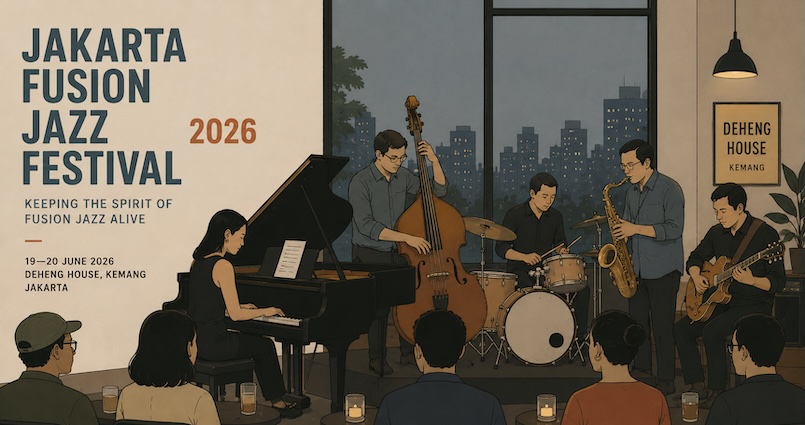
Jakarta Fusion Jazz Festival 2026: Keeping Indonesia’s Most Adventurous Sound Alive
On June 19–20, Deheng House in Kemang will host the first edition of Jakarta Fusion Jazz Festival (JFJF), bringing together some of the most influential names in Indonesian fusion jazz. More than a nostalgic reunion, the festival aims to reconnect younger audiences with a genre that once helped define the sound of modern Indonesian music.
In an era dominated by playlists, algorithms, and increasingly fragmented listening habits, fusion jazz occupies a curious position. It is rarely discussed in mainstream music conversations, yet many of the musicians who shaped Indonesian popular music emerged from the scene or were deeply influenced by it.
That makes the arrival of Jakarta Fusion Jazz Festival 2026 particularly noteworthy. Scheduled for June 19–20 at Deheng House, Kemang, the festival gathers several important figures from Indonesia’s fusion jazz history while introducing their work to a new generation. The event is part of Jakarta’s 499th anniversary celebrations and World Music Day, while also serving as the opening chapter of JAKFUSE, a larger initiative leading toward Jakarta’s 500th anniversary in 2027.
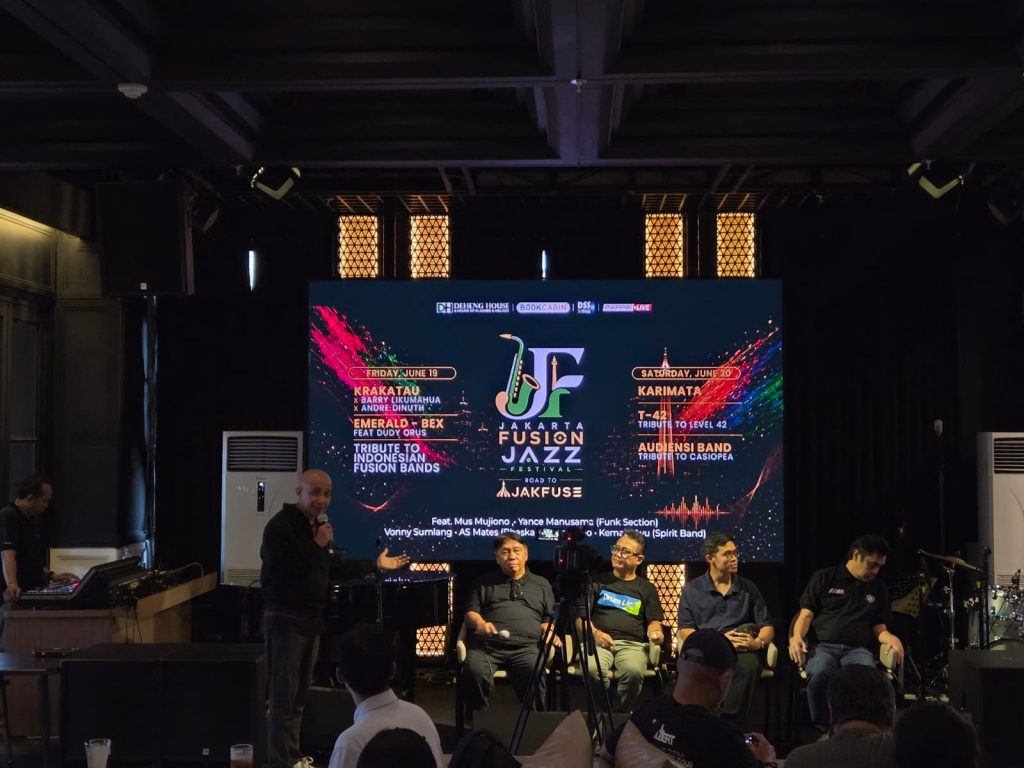
For composer Dwiki Dharmawan, one of the key figures behind the festival, the event represents more than a concert. Fusion jazz, he argues, has always been an important part of Indonesia’s modern musical development. Its spirit of experimentation allows musicians to combine jazz, rock, funk, progressive music, and local traditions into something new. That freedom remains the genre’s greatest strength.
A Brief History of Fusion Jazz
Fusion jazz emerged internationally during the late 1960s and early 1970s when musicians began incorporating elements of rock, funk, electronic instruments, and world music into jazz. Albums such as Miles Davis’ Bitches Brew (1970), Weather Report’s Heavy Weather (1977), and Herbie Hancock’s Head Hunters (1973) transformed jazz into a more expansive and exploratory form.
Indonesia quickly developed its own interpretation. Rather than simply imitating American fusion, local musicians blended jazz improvisation with Indonesian melodies, traditional rhythms, progressive rock structures, and pop sensibilities. By the 1980s, fusion jazz had become one of the most exciting corners of the country’s music scene, producing bands whose influence continues to be felt today.
Krakatau
No discussion of Indonesian fusion jazz can begin anywhere else.
Founded in the mid-1980s by Dwiki Dharmawan, Pra Budi Dharma, and Donny Suhendra, Krakatau became one of the defining groups of the era. Their breakthrough song Gemilang remains a landmark in Indonesian popular music, but the band’s deeper legacy lies in its ability to merge jazz, Indonesian traditions, and contemporary sounds into a coherent identity. Over the decades, Krakatau has evolved into an internationally respected ensemble, performing around the world while continuing to push beyond genre boundaries.
Karimata
Alongside Krakatau, Karimata helped establish the golden era of Indonesian fusion jazz during the 1980s.
Featuring musicians such as Candra Darusman, Aminoto Kosin, Erwin Gutawa, and Budhy Haryono at various points in its history, Karimata developed a sound that balanced technical sophistication with memorable melodies. Their recordings remain essential listening for anyone interested in Indonesian jazz history. Much like Yellowjackets or Spyro Gyra in the United States, Karimata demonstrated that fusion could be complex without losing accessibility.
Emerald-BEX
Opening the festival is Emerald-BEX, a project rooted in two celebrated groups from Indonesia’s band competition scene of the 1980s. Emerald won the Yamaha Light Music Contest in 1986, while Band Explosion (BEX) achieved similar recognition two years later. The current formation reunites musicians from that period while revisiting the sound that helped define an important chapter of Indonesian fusion music.
The festival will also feature a number of special performers representing different corners of Indonesia’s jazz, funk, and contemporary music landscape. Veteran jazz-pop musician Mus Mujiono joins the lineup alongside Yance Manusama and Eka Bakti of Funk Section, a group known for bringing classic funk grooves into the local scene. The program also includes Vonny Sumlang and AS Mates from progressive jazz collective Bhaskara, Eramono, and Kemala Ayu of fusion ensemble Spirit Band, whose work combines jazz sensibilities with contemporary influences.
More Than Nostalgia
Jakarta Fusion Jazz Festival clearly avoids positioning itself purely as a reunion show. Many younger Indonesian musicians continue to borrow from fusion’s vocabulary, whether through jazz harmony, complex arrangements, progressive structures, or cross-cultural experimentation. Contemporary artists may not always identify themselves as fusion musicians, yet the genre’s DNA remains embedded throughout Indonesian music.
That is perhaps why festivals like this matter. They remind audiences that innovation did not begin with streaming platforms. Long before digital music culture arrived, Indonesian musicians were already experimenting with sounds, technologies, and influences from around the world.
For longtime listeners, Jakarta Fusion Jazz Festival offers a chance to revisit a formative era. For younger audiences, it presents an opportunity to discover where many of today’s musical ideas first took shape.
And for everyone else, it is simply a rare chance to witness some of the country’s most accomplished musicians sharing the same stage.
Tickets are available through detiket.com.
Also read: The Soundtrack of Generations: Konser 7 Bintang Indonesia
Pingback: Sydney Reunion: Indra Lesmana Reconnects with Four Decades of Musical History - Jakarta Cinema Club