
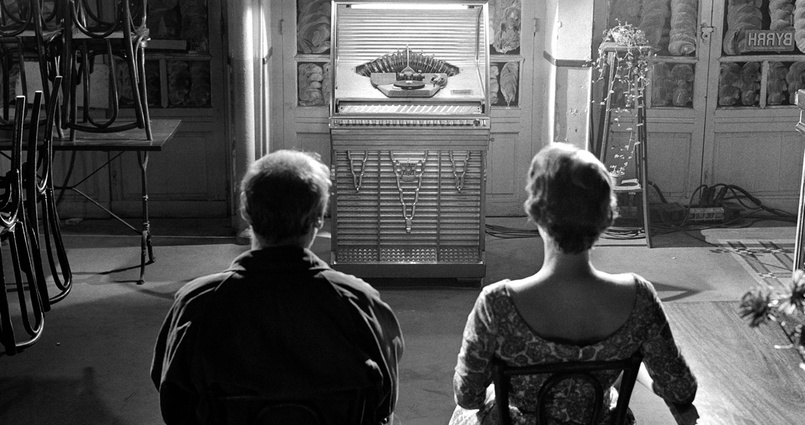
The Long Absence (1961): Memory, Love, and the Wounds Left by History
Some films are built around what happens. Others are built around what remains. Henri Colpi’s The Long Absence (Une aussi longue absence, 1961) belongs firmly to the latter category. On May 26, 2026, Jakarta Cinema Club, in collaboration with IFI, will present this rarely screened Palme d’Or winner as part of The After Hours at IFI Thamrin. Sharing Cannes’ highest prize with Luis Buñuel’s Viridiana in 1961, the film has often lived in the shadow of its more provocative counterpart. Yet more than six decades later, The Long Absence remains one of the most moving explorations of memory, grief, and the lingering aftermath of war ever put on screen.
At first glance, the premise seems deceptively simple. Thérèse, the owner of a modest café in the Paris suburb of Puteaux, notices a homeless man who passes by her establishment every day. Gradually, she becomes convinced that he is her husband, deported during World War II and presumed lost for more than fifteen years. The problem is that the man remembers nothing. He suffers from amnesia and cannot confirm the identity that Thérèse so desperately wants him to reclaim.
What follows is not a mystery in the conventional sense. Henri Colpi and screenwriter Marguerite Duras are not interested in suspense. They are interested in uncertainty. The question is not whether the man truly is her husband. The deeper question is why Thérèse needs him to be.
This distinction is what makes The Long Absence so powerful. Like many great postwar European films, it examines how history continues to inhabit everyday life long after the headlines disappear. The Second World War ended sixteen years before the events of the film, yet its consequences remain everywhere. The war survives in damaged memories, interrupted relationships, and unresolved grief.
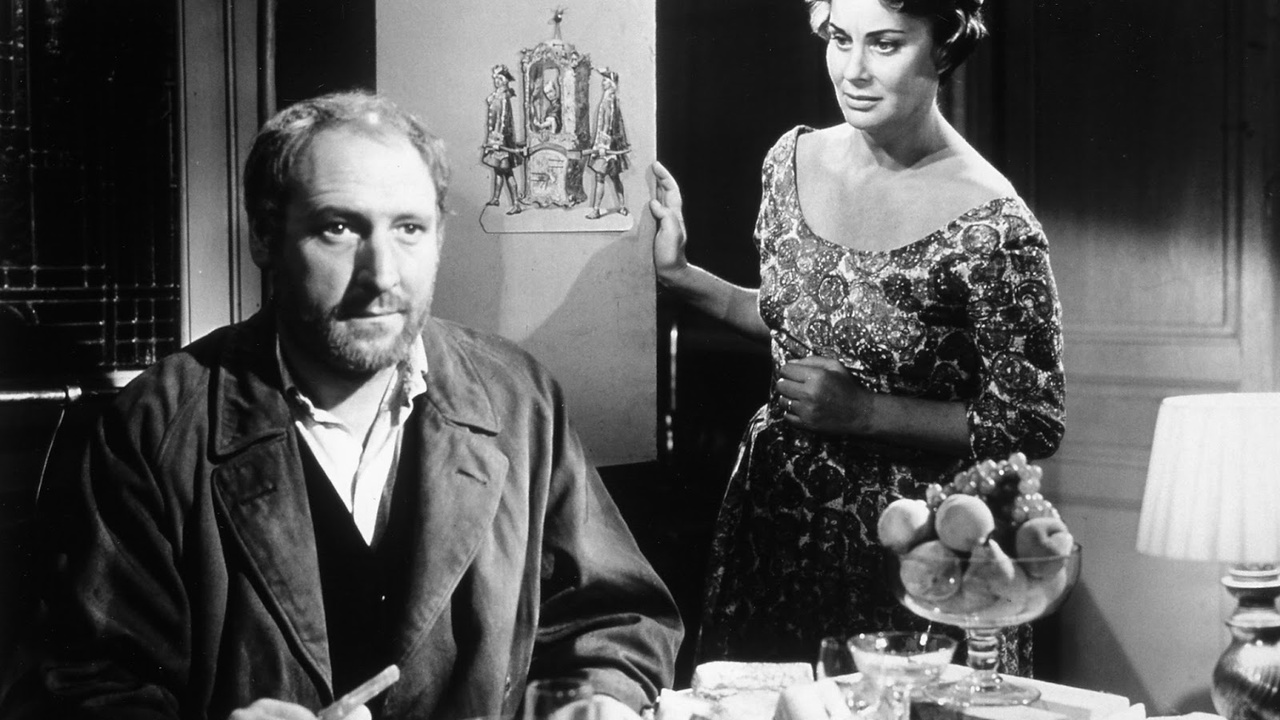
The film’s emotional center lies in the fragile space between memory and identity. If someone forgets who they are, do they remain the same person? And if memory disappears, what becomes of love?
These questions feel especially appropriate coming from Duras, whose literary and cinematic work repeatedly returned to the relationship between memory and desire. Unlike the fractured timelines later associated with Alain Resnais’ Hiroshima mon amour and Last Year at Marienbad, both films on which Colpi worked as editor, The Long Absenceunfolds with remarkable simplicity. Yet beneath that simplicity lies a profound meditation on remembrance itself.
The film’s style is equally restrained. Colpi avoids dramatic flourishes and trusts small gestures, pauses, and glances. Alida Valli delivers one of the finest performances of her career as a woman suspended between hope and despair. Across from her, Georges Wilson creates a character who is both present and absent at the same time, a living reminder of history’s ability to erase and transform.
Music also plays an essential role. Georges Delerue’s score, particularly the recurring motif “Trois petites notes de musique,” becomes a vessel for memory itself. Throughout the film, melodies function almost like fragments of a forgotten past, drifting through scenes as if searching for someone who can still recognize them.
Perhaps the most remarkable aspect of The Long Absence is how contemporary it feels. Modern cinema frequently examines trauma, memory loss, and fractured identities, yet Colpi approaches these themes with a patience that has become increasingly rare. The film understands that grief is not dramatic. It is repetitive. It returns every day, often disguised as routine.
That may explain why the film continues to resonate. Beneath its postwar setting lies a universal fear: the possibility that the people we love might someday become strangers, not through betrayal or death, but through the simple erosion of memory.
In 1961, the Cannes jury awarded the Palme d’Or jointly to The Long Absence and Viridiana. History has generally remembered Buñuel’s film more vividly. Yet revisiting Colpi’s work today reveals a masterpiece of a different kind: quieter, gentler, and perhaps even more heartbreaking. It reminds us that absence is not merely the disappearance of a person. Sometimes absence is the space between who someone once was and who they have become.
Jakarta Cinema Club, in collaboration with IFI, will screen Henri Colpi’s The Long Absence (Une aussi longue absence, 1961) as part of The After Hours on May 26, 2026 at 19:00 at IFI Thamrin, Jakarta. Tickets are available here.
Also read: Favorite Films of 2025: A Year of Feeling, Friction, and Returning to the Cinema