

Edmund Yeo’s We the Dead: Rohingya and the Fantasy of the Afterlife
Through We the Dead (Aqerat), Edmund Yeo invites us to pause and look closely at one of the darkest chapters of modern civilization, seen from the perspective of a small, often invisible element of society. At least once in our lives, most of us have stopped and asked a simple question: what happens after life ends? It is an easy question to pose, yet none of us truly knows the answer, beyond guesses shaped by dreams or beliefs learned through religion.
For those who are religious, the conversation usually leads to ideas of heaven, hell, or reincarnation. For those who are not, the responses vary even more.
I am reminded of a stand-up bit by Louis C.K., where he asks what happens after you die. His answer goes something like this: many things will happen after you die. There might be a new Eiffel Tower, maybe a new masterpiece will be built. But none of it will involve you, because you are dead. It is modern existentialism at its clearest. Louis does not dwell on death itself, but redirects attention back to life.
A few months ago, I rewatched Federico Fellini’s Amarcord at a screening at IIC Jakarta. The film is made up of dozens of short scenes, fragments that feel loosely connected, almost dreamlike. One unforgettable moment shows an old man lost in thick fog. Holding onto a wall for guidance, he asks himself:
“Where am I? I don’t seem to be anywhere. If death is like this, I don’t think much of it. Everything is gone. People, trees, birds, wine.”
Well, up yours! The man keeps walking until a horse carriage driver approaches him. He says he does not know where he is because he cannot see his house. Calmly, the driver replies that he is standing right in front of his own home. I always smile at this scene. Anyone would feel disoriented when visibility disappears. Even driving at night can make us uneasy.

These two responses to the idea of death come from comedy. In reality, people tend to fear what they do not understand. This fear is what I observed while watching We the Dead (Aqerat), directed by Malaysian filmmaker Edmund Yeo in 2017. There is no comedy here at all. Instead, Yeo explores the metaphor of life after death through painful realism, focusing on Rohingya Muslims fleeing persecution, searching for a “new life” after “death,” only to face fresh brutality at the hands of human traffickers in Malaysia.
The film follows Hui Ling, a factory worker played by Daphne Low. Hui dreams of leaving Malaysia and saving enough money to move to Taiwan. She lives in a rented room with a roommate who works as a sex worker. The apartment is often visited by the roommate’s boyfriend, who turns out to be abusive. One day, Hui discovers that her savings have been stolen by the roommate and her partner. Furious and desperate, she searches for them, but they have vanished. With her dream shattered, Hui accepts a new job that seems vague at first, until its true nature slowly reveals itself.
Hui’s new work involves documenting the operations of a human trafficking syndicate that kidnaps Rohingya refugees at the border. She is tasked with filming and photographing victims being tortured, images later sent to their families as threats. What follows are a series of tragic events that force Hui to grow numb to her role. Here, the idea of “life after death” appears from two sides. Hui hopes to reclaim her life after losing everything, yet instead she is surrounded by images of death. The Rohingya refugees hope to start over after escaping violence, only to find a new hell that is even more brutal. Hui herself is repeatedly beaten by her superiors after allowing some captives to escape.

As we move deeper into Hui’s world, reality and illusion begin to blur. She often passes a shadow puppet performance, as if watching herself in conversation with the Devil. One line stands out:
“We are puppets of repetition. You repeat the same questions whilst I repeat the same answer. We are trapped in a never-ending dance.”
In a Q&A session quoted by Reuters at the 2017 Tokyo International Film Festival, Edmund Yeo said he was compelled to explore the idea of death and life after reading news in 2015 about mass graves of Rohingya victims found along the Malaysia–Thailand border. With this film, Yeo joins a growing list of Malaysian filmmakers gaining international attention, alongside names such as Woo Ming Jin, Amir Muhammad, and Yasmin Ahmad.
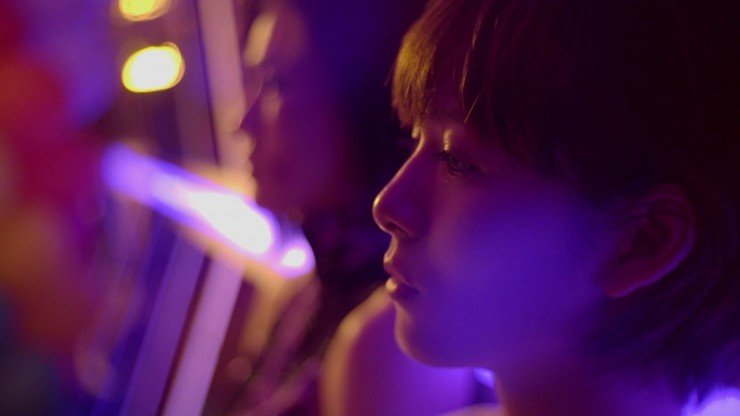
We the Dead confronts a very dark theme. Human civilization is filled with violence tied to religion and race. Wars, massacres, and persecution repeat themselves. When will this end? No one knows, just as no one truly knows what comes after death. If all humans share the same basic anatomy, differing only by origin and identity, what meaning does oppression really hold? Can we, even briefly, stop harming one another, or treat death with the same detached irony offered by Louis C.K. and Fellini?
We the Dead was featured in MUBI’s “Spotlight on Edmund Yeo” and won the Geber Award at the 2017 Jogja-NETPAC Asian Film Festival. It also received Best Director and the Tokyo Gemstone Award at the Tokyo International Film Festival the same year. This reflection was written while watching the film on MUBI, accompanied by songs from P. Ramlee.


Pingback: Lynn Shelton: Potret Semangat Independen yang Meninggalkan Kita - Jakarta Cinema Club
Pingback: Planet Of The Humans: Fantasi Energi Terbarukan - Jakarta Cinema Club
Pingback: Lynn Shelton: The Independent Spirit We Lost - Jakarta Cinema Club
Pingback: Taipei Story: Keindahan dalam Ketidakpuasan, Ketakutan dalam Ketidakpastian - Jakarta Cinema Club